
Ekomuzeum
The palaeontological collection of Starachowice presents an exceptional record of vertebrate activity preserved in the rocks of the Świętokrzyskie Region — from the Early Triassic traces of Wióry to Jurassic dinosaur footprints.
This page focuses on what can be seen in the palaeontological exhibition at Ekomuzeum: trace fossils, dinosaur footprints, geological material and the research history behind the collections.
Fossil traces of ancient vertebrates
The museum presents spectacular trace fossils from the Świętokrzyskie Region. These are not simply bones: they are records of animal activity preserved in ancient sediment. The exhibition includes material from Wióry and dinosaur tracksites in the Jurassic deposits of the region.
The museum itself was established in 2001 and occupies an approximately 8-hectare historic industrial site. The palaeontological exhibition forms one part of the wider Museum of Nature and Technology.
Wióry · a world recorded in footprints
The Wióry area contains red sandstones, siltstones and claystones dating to about 245 million years ago, from the Early Triassic — the beginning of the Mesozoic Era.
The museum describes these deposits as sediments of ancient rivers and lakes, including river-channel, crevasse-splay, floodplain and different limnic environments. Vertebrates living around these water bodies left numerous traces that are now preserved in the rock.
What is preserved?
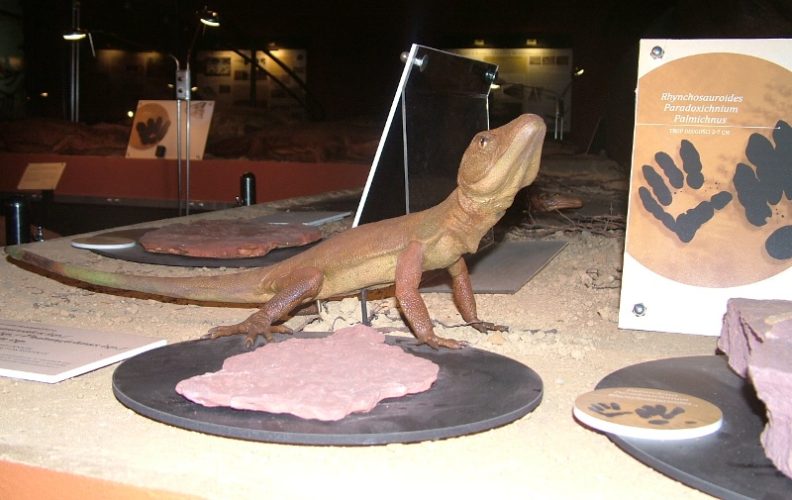
Among the spectacular Wióry specimens on permanent display are foot impressions with preserved claw marks and impressions of scaly reptile skin.
The museum states that the Wióry trace-fossil collection is held by Ekomuzeum and the Institute of Paleobiology of the Polish Academy of Sciences in Warsaw.
From discovery to collection
Wióry footprints discovered
The Wióry traces were discovered by paleoichnologist Tadeusz Ptaszyński. Geologist Kazimierz Rdzanek undertook the collection and protection of fossils exposed during construction of the Wióry reservoir.
Protection and documentation
Over more than two decades of protection and documentation work, around 5,000 palaeontological and geological specimens were assembled from the Wióry area.
Wióry at Ekomuzeum
Many of the spectacular Wióry trace fossils are now presented in the permanent thematic exhibition at the Museum of Nature and Technology in Starachowice.
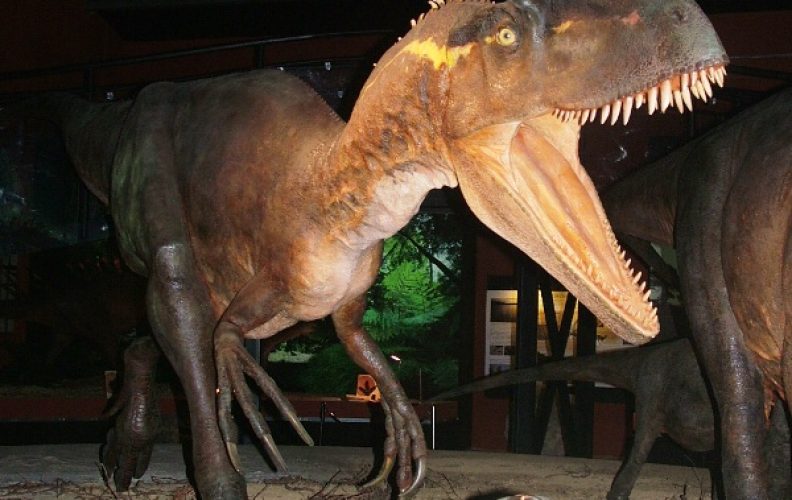
Prorotodactylus and the Early Triassic track record
Research by Tadeusz Ptaszyński led to the identification of Prorotodactylus, which the museum describes in connection with the ancestors of dinosaurs, pterosaurs and crocodiles. The museum describes the Wióry tracks as the oldest known assemblage of Triassic archosaur traces in the world.
The significance of Wióry therefore lies in the information contained in the footprints themselves: they record vertebrate activity during a geological interval immediately preceding the later world of dinosaurs.
Dinosaur footprints of the Świętokrzyskie Region
The museum reports that the first dinosaur tracks in the Świętokrzyskie Region were discovered in 1959 by Władysław Karaszewski of the Polish Geological Institute. Systematic research on the region’s dinosaur tracks has continued since the mid-1980s.
More than ten tracksites have been recognized. The tracks occur in river, lake and beach deposits representing different intervals of the Jurassic. The museum gives an age range of approximately 205 to 150 million years.
Large predatory dinosaurs
The exhibition includes tracks of large predatory dinosaurs assigned to the ichnogenus Megalosauripus, including material from the Jurassic of the region.
Herbivorous sauropods
Large herbivorous sauropod tracks are represented by material assigned to the ichnogenus Brontopodus.
Ornithischian dinosaurs
The permanent exhibition also presents tracks of stegosaurs preserved in limestone deposits from very shallow marine environments.
More than one kind of dinosaur story
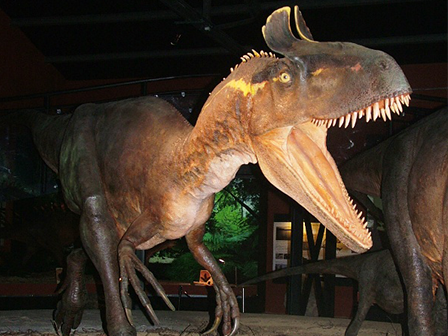
The museum’s account of the regional record includes Early Jurassic predatory ceratosaurs such as Dilophosaurus and Coelophysis, early allosaurs, large herbivorous sauropods and early ornithischian dinosaurs. Late Jurassic deposits preserve traces of allosaurs, herbivorous sauropods, ornithopods and stegosaurs.
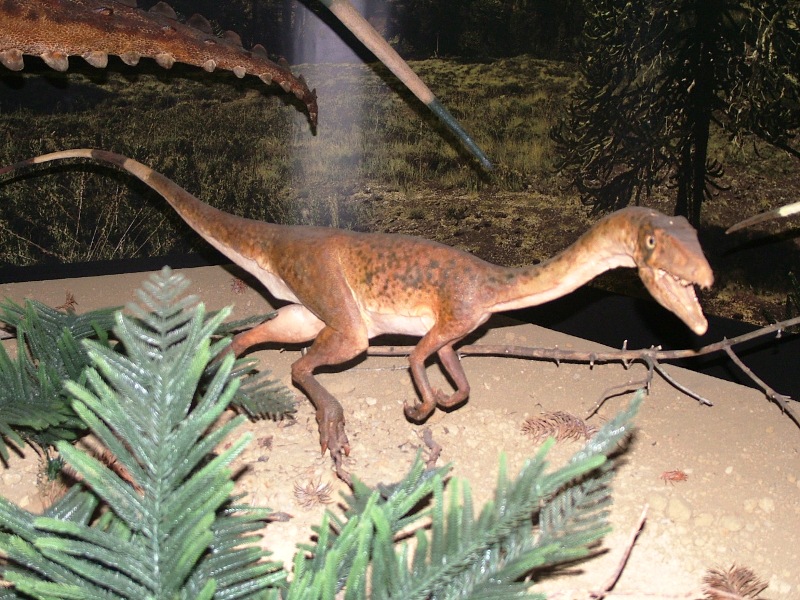
Trace fossils as scientific evidence
The palaeontological work associated with Ekomuzeum includes the Buntsandstein Working Group (Grupa Robocza Pstrego Piaskowca). The museum lists Grzegorz Niedźwiedzki (Uppsala University, Sweden), Tadeusz Ptaszyński (Warsaw) and Maciej Małkiewicz (Sandomierz) as members.
The group’s work concerns the palaeontological recognition of Buntsandstein deposits in the Świętokrzyskie Region, with particular interest in vertebrate trace fossils — animal tracks preserved in lithified sediment. The museum also notes scientific exchange with researchers from Germany, Hungary and the United Kingdom.
From ancient rivers to Jurassic shores
The palaeontological exhibition connects two very different chapters of the region’s geological history: Early Triassic continental environments recorded at Wióry and Jurassic environments represented by dinosaur tracks from the Świętokrzyskie Region.
Together, these trace fossils show how much information can be preserved without a skeleton: movement, presence and activity become part of the geological record.
Muzeum Przyrody i Techniki “Ekomuzeum” im. Jana Pazdura
ul. Wielkopiecowa 1
27-200 Starachowice
Poland
Main entrance: ul. Marszałka Piłsudskiego 95
Parking is located in front of the main entrance.
Open in Google MapsVisit the museum
The current museum website states that the palaeontological exhibition is available as part of the museum’s visitor offer. Entry is from Piłsudskiego 95 and visits are conducted with a guide; current opening times and ticket information should be checked directly with the museum before travelling.